

Tips to Provide the Best Website Experience, Page 13 of 25
Discover expert articles on website optimization, security, speed, and content management from Contensive. Learn strategies for building better web experiences.
5 Facts About Mobile App Development That Will Instantly Put You in a Good Mood

In 2015, mobile app development is no longer an option – it’s a must for marketers looking to establish, maintain and grow a foothold among their target audience. For many marketers, especially those looking to promote small businesses with a limited budget, it’s the source of a continuous headache. But it doesn’t have to be! Here are 5 facts about mobile app development that will instantly put you in a good mood.
1) The Mobile Future is Here
The statement we made at the beginning of this blog post is easily supported by facts: last year, mobile internet usage overtook desktop internet usage for the first time, and the gap is expected to widen in the future. With almost 2 billion users worldwide now owning a smartphone or tablet, successful businesses will no longer use mobile marketing as a part of their marketing strategy – it will become their digital marketing strategy.
2) HTML 5 Integration is Coming
An unfortunate side-effect of mobile internet usage beginning to dominate world-wide are the many providers who vie for attention in this increasingly crowded marketplace. But we’re here to alleviate your worries about having to develop separate apps for iOS, Android, Windows and more: over 60 percent of mobile app developers now work in HTML 5.
That means additional features and functionalities, including the (so far theoretical) possibility to develop a hybrid app that works on all devices and operating systems. A future in which a single app can serve your entire audience, regardless of what phone or tablet they own, is not far away.
3) App Advertising Means Revenue
As a marketer, you probably have a specific goal for your app. That may be direct sales if you engage in e-commerce, or more general brand awareness. But what if we told you that your app can actually generate revenue beyond its main purpose?
It’s true: no less than 38 percent of global app developers named advertising as their most significant revenue model. Creating a custom app for your business does not just make sense from a brand awareness perspective, it can have a tangible impact on your bottom line.
4) Mobile Users Buy More than Desktop Users
While advertising is certainly an important revenue stream, especially e-commerce businesses will want a more direct ability to increase their sales through their app. If that applies to you, we come with good news for you as well: mobile users spend 50 percent more when shopping online than their desktop counterparts, meaning your app can be the gateway to significant revenue improvements.
In addition, the rise of mobile payment options from both Google and Android further eases your ability to sell your products directly through your app and increase your profits. Apple and Android Pay allow app developers to easy set up e-commerce systems, right on your phone.
5) Agile Apps are Faster, More Productive
Finally, we’d be remiss not to end with a fact about agile development that will finish up this blog post on a high note: apps that are developed using our preferred methodology aren't just produced more quickly without losing quality, they also are more productive when finished.
A 2013 study showed that apps developed with an agile methodology have a 37 percent faster time-to-market than their more traditional "waterfall" development alternatives. In addition, the same study showed that their productivity was up 16 percent over average. That's why we believe so strongly in agile development.
So there you have it! 5 facts about mobile app developments that will instantly put you in a good mood. It's a good time to get and optimize an app - and we'd love to help you get there! Contact us today to learn more about your options, agile development, and how an app can help you succeed in your industry.
Online App Development Allows Users to Access Shopping Apps on Larger Screens

Many people assume that "mobile" is implied when they see the word app, but many companies have realized that it's far better to have their service available in other online forms as well. This way, people can use their app at home as easily as they can while out and about. Since most mobile users still have small-screen devices, they appreciate being able to pull the application up on their PC's widescreen when they want to sit and relax. Of course, it also works the other way - nobody wants to be tied to their PC or Mac either, so it's essential to have a portable version of everything.
Shopping has always been a favorite pastime, so it's no wonder that there are plenty of apps out there to help with it. Here are a couple of favorites that have combined online app development with mobile to provide a near-seamless experience to users no matter where they are:
Wal-Mart Savings Catcher - The app allows participants to have Wal-Mart automatically compare some of its prices against advertised prices of other stores, and if a match is found, it automatically makes the difference available as a Wal-Mart gift certificate or as a deposit to one's Bluebird account. On the front end, it's very easy to use in both mobile and online forms, and users do not need separate accounts to access the different versions. Despite early reports of glitches, it is now almost seamless.
The back-end of the Savings Catcher app, on the other hand, is surely very complex. It determines the location of the Wal-Mart store that was used, looks up all of the competing retailers in a wide radius, compares the prices, and refunds the difference when a lower one was found. The only sign to users that this is actually complicated is the delay that comes before the final answer is delivered. It typically takes a couple of days to either get a credit or see the app crow that "Wal-Mart's prices won!"
SavingStar - This app allows users to get money back on selected products. While it puts great promotional emphasis on its mobile version, it also has an online version that can be used in a similar way. Each version requires the product's bar code number and a picture of the receipt as proof of purchase, but the methods for submitting these things varies according to which version is in use.
Like Wal-Mart's app, this one is simple for users but requires a fairly complex back-end. While there is no comparison of thousands of localized prices, the system must be able to capture clear images and match receipt listings against claimed purchases. It might seem like it'd be easy to code an app to use a phone's camera, but alas, this is far more difficult than it might seem. Many shopping apps have several updates before they master the art of focusing the camera on a receipt or UPC. To avoid this problem, make sure that this aspect of the app's mobile version has been very well-checked before release.
If you publish an app that helps people save money while shopping and actually works, you are sure to find plenty of users both online and via mobile. When this app can be used in both forms, its popularity will grow even more. To ensure it's popularity, make it about grocery shopping - even those who "hate to shop" have to eat, and they will want to save money on their food.
To ensure that your app will work perfectly and be enjoyable to use, just contact us. We'll be glad to take care of all of the tough technical details, make sure that the essential aspects like scanning and image capture work perfectly, and design online and mobile versions so it can be seamlessly used in any situation.
Lessons Learned in Creating Incrementally Through Agile

You've perhaps heard about agile development in the field of business web development, but probably didn't understand what some of the arcane terms meant. Much like agile marketing where all marketing agencies work together to create larger projects, agile development takes big web development projects and breaks them down into increments. Using terms like "sprints", which is a set amount of time web developers work to design a project, you can get your own web development done more efficiently.
Then you have even more offbeat terms like "scrum", which is an incremental process for big web projects. Apps, for instance, are a major aspect of all business web development that work better when design gets broken into parts. Because apps have multiple parts that need individual focus (as do websites), it's worth looking into a scrum approach.
As you work with this frame of mind, numerous teams go to work with sprints and focus on individual "stories" therein. Stories are all the details of each element of web or app development. When these have development teams working collectively, you can get your app out to the public in a shorter amount of time.
Conversely, some harsh lessons are in the national spotlight that show why the old waterfall approach no longer works for web development. By adopting an agile development philosophy with a development team, you can tweak things as they're created using customer feedback.
Finding Your Web Development Stories
When you work with a development team, you want complete transparency while developing an app for your business. We've adopted that approach here at Contensive where we'll create an app for your business by using the agile scrum process. This allows us to communicate better with you about what's involved in the app creation.
The question is what elements do you need in your app that we can work on in increments and stories so they have better cohesion? Finding features that connect better with customers can get a better sense of targeting using scrum development.
Creating Easier Navigation
We'll work closely with you on finding each story of your app and what needs the most focus to reach your customers. Navigation is something that needs particular attention using a simplified design policy. Since the most successful apps always have a simple interface and menu functions, we'll make sure this gets done the way you want it.
With the scrum development process in action, we translate how much the design is going to cost, how much time it takes, development details, plus doing reviews.
The latter is especially valuable because it creates a stronger sense of communication with you at all times. Agile development helps get everyone on the same page, including tapping into user response during tests.
A Strong Sense of Branding
Integration of your brand with the design of an app is an important focus our team can help become a reality. You're always in on the creative process so the branding on your app fits exactly with your image and company message. This includes a careful use of color and information about your products.
Branding also means real-time marketing tools so your customers can use the app while in your physical store. Product comparisons and quick information about products while on the go is a major part of mobile e-commerce now that you need to take seriously.
Lessons Learned in Using Agile Development
One of the most notorious cases of a website that didn't use the agile development process was Healthcare.org. Many wrote about the fiasco with the website and how it confused users after it went live due to lack of testing. It's a lesson of how efficient agile development is and why it pays to use a web design team using the same philosophy.
Contact us here at Contensive to find out more about how can help create a business website or app for you with complete life-cycle support.
Business Website Development means Fresh Content

Content is king. To engage with a customer you draw them into an interesting ongoing relationship, a relationship which keeps them returning to your website on a regular basis. Without dynamic content, your website may be superficially interesting, but it only holds the customer's interest for a limited period of time. Content as engagement means that the customer wants to return to your site because they receive something of value every time that they do.
Whether you sell a physical product or a service, you have a lot of competition online. Ask yourself what distinguishes your site from the competition, and then ask yourself whether you will even have the opportunity to show your stuff to the potential customer or whether your site will never even be looked at. There are tools such as search engine optimization (SEO) and to be sure, being at the top of a web search is valuable and worth pursuing. However, it is not enough to be high in search engine rankings.
While potential customers will search for a product on the web if they have to, before they even take that step, they search their own recollections and experiences. If they can recall a vendor who has captured their imagination, they will never even do the generic web search, they will look for that resource that they already know. A successful content as engagement strategy means to become the resource that people already know rather than the result that people search for.
It's not enough that a potential customer has seen your site a single time. Compare this to driving by a billboard advertising a plumber a single time. You have seen the advertisement, but by the time that you need a plumber in a year or two years, you have also seen a million other things. Now consider driving past the same billboard every day on your way to work. You are constantly reminded of this plumber, and though you still may not need a plumber for the same year or two, when you do need one, you will be more likely to think of what you have been seeing every day as you drive past it.
The same idea holds true of websites. Just because someone browsed your site a single time a year ago does not mean that they will remember you when they need your services. As with the commuter, the web user is bombarded with an ever-increasing amount of information, and if nothing stands out about your site, there is no reason that the customer will think of you first.
Content as engagement means that the customer will voluntarily come back to your site before they need you. They will remember that you exist out of the thousands of your competitors. Essentially it is stockpiling goodwill against the day that the customer needs a vendor like you. When that day arrives for the customer, you want to be the thing that the customer knows rather than the thing that the customer searches for.
Content as engagement obviously must change, be current, and develop continually. No matter how impressive your site is or profound your original blog entries, if there is no change in content, there is nothing to make potential customers come back to visit again and again. This increases the chance that they will forget you before they need what you provide. With dynamic content, customers come back just to see what you have to say and what you think. You become one of their sources of information, and that keeps you in the forefront of the potential customer's mind.
For assistance developing your business social media presence, please contact us.
Is Your Web Strategy Meeting Customer Expectations
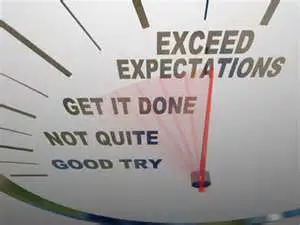
Every business owner knows that client satisfaction is fundamental to the success of any organization, whether a service company, a manufacturer, or a retailer. What many owners don't know, however, is that customer expectations are changing, and to keep customers satisfied, the website development process and the ways you are doing business must change too.
Entrepreneur Micah Solomon listed in Forbes.com his Top Ten list of ways customers and customer expectations are changing.
1. What does "fast" mean? The customer's expectation of timeliness has increased dramatically. As Amazon.com often makes deliveries the following day and when many organizations have 24/7 online staffing to answer questions and concerns or to take orders or deal with problems, it is simply not good enough to respond in a day or two. With an estimated 85 percent of millennials (ages 18-35) using smart phones, instantaneous service is expected.
2. Typos and errors aren't allowed. Customers expect accuracy in a technological world, so inaccuracies regarding such problems as the cost of a specific procedure, what items are in stock, when a product can be delivered, or inaccurate product specifications are not acceptable.
3. Willingness to help. Solomon says that customers are more than willing to assist in the service process, such as filling out forms, filling in contact information, to avoid mistakes.
4. Extended hours. Try to attain 24/7, at the very least for support services.
5. Money back guarantee. Amazon set the lead, and other companies must follow. The expectation is that products will be guaranteed, with no questions or hassles.
6. No hidden costs. A growing trend is resentment over hidden costs or fees, particularly shipping costs. Customers don't want to read the fine print.
7. Omnichannel integration. Customers expect companies to honor the same offers in all channels (web, in-store, phone, mobile, catalog), and they expect to move between channels without a problem. A catalog offer, then, must be available if the customer calls by phone, a mobile offer must be honored in the store. Likewise, a credit card on file from a phone order should be available in the store, and in-store purchase history should be available to an online customer service rep.
8. Pay attention and respond! Customers expect you to be monitoring their communications, complaints, and compliments, and they expect a response that is quick and thorough. As Solomon says, "If a customer says something about, or to, a company via Twitter, a web form, or any other channel, they expect the company to notice, to react, and to respond." This is just as important for service providers as it is for manufacturers and retailers. Customers want your response.
9. Get real. There is a growing desire for more authenticity in communication--customers dislike scripted speech. The automatic buzzwords and canned responses in a service call sound like nails on a chalkboard. "Thank you for choosing XYZ as your one-stop internet service provider" sounds phony, and is phony.
10. They're empowered. For the most part, customers know they're "always right" and they have the social media voice to make sure you know it too.
We can help you meet your customers' changing expectations by helping you develop your website and social media channels to keep on top of these customer trends. With our talented team of engineers, analysts and designers, we offer you complete life-cycle development and support for website applications, mobile applications, online integration, and responsive design. We can help you rethink business processes, leverage the latest mobile and desktop technologies, and optimize your web presence to any size device or screen.
Is your organization ready to meet and exceed the expectations of your customers? Let us show you how we can support your business goals. Contact us.
How to Explain Agile Development to Your Boss

Let’s say your enterprise is ready to partner with a firm that offers web and mobile app development and integration.
It’s now time to map out your criteria for choosing the right partner, and an agile scrum approach tops your list of must-haves. Your boss glances at the list and simply shrugs at your number one item.
You’ve got work to do to convince your boss that a partner relying on an agile scrum approach will help your company attract and retain customers and save your company time, money, and headaches.
How to explain agile development to your boss
Start with the goals that you and your boss share. For example, you both want products that meet or exceed customers’ requirements (in this case, your company’s needs) and get to you quickly; you need high quality products that work as expected; and you need products that appeal to your end users.
Next, focus on the goal for impacting the bottom line. Agile will save time and money, which means maximizing profit.
Now you have prepared your boss to listen while you drill down to explain the benefits of agile.
Test-driven development: saving time and money
With competition at a peak level and products more complex than ever, customers rightly demand higher quality, quick turnaround time, and cost containment.
Simply put, agile is the answer. Why? Its flexible, test-driven method is designed specifically to reduce errors, contain costs, and please customers.
How? A standard feature of the agile approach—really, of the internal testing and retesting—is to reduce the time and costs involved in quality assurance, which, in turn, means a better product gets to customers more quickly.
As a bonus, if the customer changes their needs mid-way, agile has the flexibility to turn on a dime and meet the customer’s changed expectations.
Course corrections in agile
In agile, course corrections are built in as a natural part of the process, rather than an error found later and fixed by re-opening the process and re-working parts of the product.
- At the start of an agile process, each part of the product is identified, along with the job it has to perform. Then the team maps out the product development, viewing all the parts woven together and working in sync.
- The team working on developing the product—the scrum team—puts their heads together at every point in the process, so that communication and collaboration are built into the agile approach.
- In agile, product development is completed in sprints, from point A to B, B to C, and so on—not in linear, long-distance, A to Z marathons. The scrum team can spot errors during or right after each sprint and quickly make a course correction.
- Because scrum team members include professional designers, engineers, and analysts, the team can spot any errors early on and has the right people involved to decide what course corrections to make immediately.
Agile fosters creativity
Meeting customers’ needs these days often includes creative and innovative approaches to product design and development. Nowhere is this more accessible to customers than with the agile approach.
Scrum teams use the synergy of their combined professional skills and experience to infuse their sprints with more than just spotting errors—they also spot opportunities to create breakthroughs that delight customers.
Once they see an opportunity, agile enables the scrum team to pivot quickly and rework their product development to incorporate improvements and innovations.
The scrum team also incorporates customer feedback along the way, between sprints, to insure that the customer’s requirements are being met or exceeded.
Flexibility, quick course corrections, opportunities for improvements, cost containment, on-time delivery, high quality, and customer feedback and satisfaction—why not turn to a company that relies on agile as their approach to product development?
Need more help explaining the benefits of agile to your boss? Contact us to schedule a demonstration.
Transparency: The Hidden Power of Agile Development

When you search for agile development online, you'll find plenty of articles detailing the several advantages of this development method over more traditional, waterfall philosophies. Heck, we even have some on this very blog, detailing benefits like low cost and increased flexibility. But one crucial advantage of agile development deserves more attention that it currently gets: the addition of transparency to your software, app or web development process.
Why You Need Transparency in Your Development Process
Going into a new project, you may not think of transparency as a major pain point throughout the process. But once you're elbows deep into the development, we can almost guarantee that it will be on your mind almost constantly.
After all, you are probably in a pretty significant contract with your developer. You want to make sure that your product (software, app, or website) turns out just as you intended, working to produce and market your company to its highest potential. And the only way you can reach that goal is by adding transparency to the process.
How Transparency Works in Agile Development
Choosing a developer that specializes in agile development will help you achieve that degree of transparency. These developers break the project into various 'chunks' that they can work on simultaneously, ensuring multiple opportunities for you to give feedback and check in on the status of your project.
The result is full transparency, in a variety of ways:
- Cost. Through agile development, you will understand both the total cost of your project and be kept up-to-date with any possible additional costs as they occur. Traditional waterfall methods often keep these additional costs hidden until it's too late to do anything about it; through agile development, you will know early enough to make adjustments.
- Time. Similar to cost, waterfall development may mean running behind your intended timeline without even knowing it. Especially if you have a hard deadline for your new website or app, the result can be a rushed project that does not work as intended. Agile development, on the other hand, lets you keep a close eye on the timeline to ensure the project is finished before the deadline.
- Development. An agile developer will keep you updated throughout the process, with frequent status reports letting you know about the current status and going into every detail you need to know. As a result, you'll learn valuable nuggets about your software, app, or website that will prove crucial once the project is complete.
- Review. Finally, you'll be included in the review process of your finished product, ensuring that it turns out just as you intended. A new software, website or app can be a significant investment of time and money, so you want to be sure that the finished product turns out exactly as intended. With agile development, you can do just that.
All clients have contracted out services that they ended up knowing little about. The results are generally frustrating, and the partnerships don't last long. We, on the other hand, specialize in agile development - which means we both focus on the transparency you need, and develops the trust needed for successful product completion.
We even go beyond that completion. Aiming to become your long-term development partners, we want to be sure that we're not only meeting, but exceeding expectations. Fortunately, with the many benefits of agile development on our side, we're confident that we can do just that.
Are you in need of a new app or website, and are looking for a company that can help you get exactly what you need, with as much input as you want to provide? In that case, contact us. We'd love to show you just how much we value transparency, and just how much it will benefit your product.
Choosing a Web Development Company

Modern web development takes far more than knowledge of HTML and a fairly decent eye for design. Challenges abound, and they involve things that weren't even on the radar just a few years ago. You need to have a site that will render well no matter what size of screen the viewer is using, you might need to allow your staff to interact with technology even when they can't get a connection, and you almost surely need a phone-specific app on top of all of that. To ensure that all of these needs are covered, you need to hire a full-service web development company.
Here at Contensive, we know that web development goes much further than the web itself. We understand that many elements must be integrated to create not just a web presence, but a full suite of electronic communication elements that all work together to create your internet brand experience. Services that our clients need include:
Website Development
A good website often serves as the core of a company's online presence. The site is what people see if they type your domain name into a browser. Sites that we produce will render perfectly whether the visitor is seeing them on a big widescreen monitor or a tiny phone screen. If you need an e-commerce site, we'll make sure that it's easy to buy from any screen size as well. We test our sites on many screen sizes so that you don't have to worry about whether their features will work across platforms. Of course, we make sure that the site looks great, too.
App Development
Every company seems to have a dedicated app these days, and in many cases, this is a good thing. Have us make your mobile app to make sure that your new release is one of those cases where people will be glad to install it. We'll work with you to devise capabilities that are useful, fun, and unique. Our development process will also ensure that your new app is free of errors and other problems so that people will be glad to use it.
Driving Traffic
Most web development companies produce a site or app, hand you the login information, and send you on your way. We know that even the best and most modern developments are only useful if you can get traffic to them. Therefore, we offer services to drive traffic and developments that will keep it coming.
On the development side, we can add forums, blogs, and other systems for capturing user-generated content in ways that please both people and search engines. We also provide tracking systems, databases to centralize contact, and more. Our services don't stop there. We also provide search engine friendly web content, optimize sites so that they're easier to rank, and give you the tools needed to monitor progress.
Ongoing Support
We know that constant updates are expected in today's web development world. Therefore, we have ongoing support packages that allow you to get these updates without having to start from scratch. Our Agile/Scrum development methods make it easy to add new capabilities, delete those that have outlived their usefulness, and adapt current systems to meet the changing needs of you and your customers - all without the need for full redevelopment of your sites and apps. You'll enjoy the ability to land on your feet in an ever-changing web landscape, while your accountants will enjoy the lower costs of this development system.
To learn more about our services and bring your web presence into the modern age, just contact us. We'll be glad to discuss your vision and what we can do to bring it into reality.