

Tips to Provide the Best Website Experience, Page 10 of 25
Discover expert articles on website optimization, security, speed, and content management from Contensive. Learn strategies for building better web experiences.
5 Traits to Look for In Software as a Service Development Companies
Software as a service companies have become quite popular in recent years, and for good reason. They provided a streamlined service that can be useful to both consumers and businesses alike. They create recurring income that help to fuel growth and keep things moving in a positive direction, even during slow times. But, finding a company that can deliver a polished and highly valuable Software as a Service development team that will work well with you and communicate effectively can be quite difficult. There are many things that need to be taken into account when you are evaluating software as a service development teams in your local area. Take these traits into account when you are speaking with these companies:
An Excellent Portfolio with References You Can Speak To
Before choosing a company to work with, take a look at their portfolio. What kind of companies have they worked with in the past? Have they developed complete software as a service system in the past? How did it turn out, and did it lead to a positive return for the company that had it produced? You should seek out a company that has expertise specifically in developing monthly software as a service platforms, rather than your typical software development company.
An Understanding of your Business and Vision
Does the company that you are working with truly understand your vision for the project? Do they understand how it will affect your business and what you need the software to do for your customers? Make sure that you are working with a company that understands your industry and preferably has worked with similar businesses int he past while delivering excellent results.
A Plan for Communication, Milestones, and Ongoing Maintenance
In all likelihood, your piece of software is going to require a lot of communication throughout the process. Not all details will be able to be ironed out before you sign on the dotted line and unforeseen issues will constantly arise. Work with a company that has the entire process planned out as much as could be, from initial communication and meetings, to post-delivery bug fixes and reporting. It is important that you work with a company that will stick with you throughout the process of launching and taking suggestions from your users.
Excellent Communication Skills Throughout the Process
One thing that you always need to take into consideration when looking for a SaaS development company is how well they are going to communicate. From the moment that you talk to them and begin the pre-sales process, they must be able to communicate effectively since that is such a large part of a successful SaaS launch. If they are not able to communicate effectively during the pre-sales process, you shouldn't have a lot of faith that they will continue to do so moving forward. Choose companies that communicate with you effectively.
Experience Within Your Specific Industry
Perhaps the best quality that a development company can possess is a load of positive experiences within your specific industry. If they already understand your customers and their needs, that means less research is required to deliver a high-value product. Try to find companies that have delivered solutions to other companies within your industry an ensure that they can provide you with a consistent return.
Launching a software as a service project is a huge investment. You don't need a development company, you need a partner who will work with you to ensure that you receive the best possible outcome. If you would like to speak with our SaaS experts and see if we would be a good fit for one another, please contact us today to schedule your initial consultation.
Business Website Development means Fresh Content
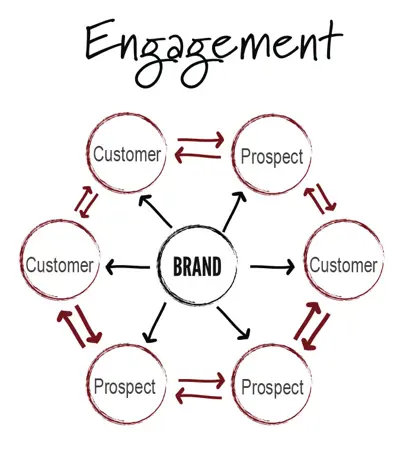
Content is engagement. To engage with a customer you draw them into an interesting ongoing relationship, a relationship which keeps them returning to your website on a regular basis. Without dynamic content, your website may be superficially interesting, but it only holds the customer's interest for a limited period of time. Content as engagement means that the customer wants to return to your site because they receive something of value every time that they do.
Whether you sell a physical product or a service, you have a lot of competition online. Ask yourself what distinguishes your site from the competition, and then ask yourself whether you will even have the opportunity to show your stuff to the potential customer or whether your site will never even be looked at. There are tools such as search engine optimization (SEO) and to be sure, being at the top of a web search is valuable and worth pursuing. However, it is not enough to be high in search engine rankings.
While potential customers will search for a product on the web if they have to, before they even take that step, they search their own recollections and experiences. If they can recall a vendor who has captured their imagination, they will never even do the generic web search, they will look for that resource that they already know. A successful content as engagement strategy means to become the resource that people already know rather than the result that people search for.
It's not enough that a potential customer has seen your site a single time. Compare this to driving by a billboard advertising a plumber a single time. You have seen the advertisement, but by the time that you need a plumber in a year or two years, you have also seen a million other things. Now consider driving past the same billboard every day on your way to work. You are constantly reminded of this plumber, and though you still may not need a plumber for the same year or two, when you do need one, you will be more likely to think of what you have been seeing every day as you drive past it.
The same idea holds true of websites. Just because someone browsed your site a single time a year ago does not mean that they will remember you when they need your services. As with the commuter, the web user is bombarded with an ever-increasing amount of information, and if nothing stands out about your site, there is no reason that the customer will think of you first.
Content as engagement means that the customer will voluntarily come back to your site before they need you. They will remember that you exist out of the thousands of your competitors. Essentially it is stockpiling goodwill against the day that the customer needs a vendor like you. When that day arrives for the customer, you want to be the thing that the customer knows rather than the thing that the customer searches for.
Content as engagement obviously must change, be current, and develop continually. No matter how impressive your site is or profound your original blog entries, if there is no change in content, there is nothing to make potential customers come back to visit again and again. This increases the chance that they will forget you before they need what you provide. With dynamic content, customers come back just to see what you have to say and what you think. You become one of their sources of information, and that keeps you in the forefront of the potential customer's mind.
For assistance developing your business social media presence, please contact us.
5 Tips for Successful Software as a Service Development

In recent years we have seen the sudden rise of software as a service. These software tools charge a monthly rate for access to highly powerful tools that might help you to expand your business or automate processes within your industry. There are many opportunities that software as a service businesses can provide to entrepreneurs. There are many benefits to choosing this route over some of the more traditional software sales methods.
1. SaaS Turns Developers into Decision Makers
In software as a service models, developers have been able to take on larger roles within their own organizations or as valued team members. Since most SaaS models run on a monthly subscription model, developers must find ways to provide continued value to their audience in order to keep them subscribed.
2. User Experience Design Becomes Increasingly Important
When your customers are paying a monthly fee to gain access to your software, user experience development takes on an increased role in your day-to-day operations. When your customers are paying a monthly fee to access to software, they are expecting a higher level of commitment from the develop, and issues in the user experience could cause cancellations from your customer base. Many businesses underestimate how important user experience truly is. It can make or break the success of a software as a service platform.
3. Offer Several Packages
You will find that your customers fall within a range. Many software as a service development companies start by offering a free option that allows their user base to make an account and try out some of the basic features that the software provides for free. This will help your customers to see what they could potentially get out of subscribing to the software and also allow them to get a feel for the basic features that you make available through the free package. Of course, not all software types are suitable for a free package, but there should always be a series of stepping-stones that a customer can take toward your largest package. Make sure that your software has several upsells and account upgrades available to those that are using your smaller packages.
4. Find API and Integration Opportunities
One of the traits possessed by many software as a service businesses is the usage of API's and integration. By allowing your software to connect with third-party software and platform, you add many new uses to your ecosystem and allow third-party developers to piggy-back off of your work and extend the functionality of your program. By seeking out other developers in your industry, you will be able to find a range of new opportunities that can get your software in front of a completely new audience that otherwise would have never known your software existed.
5. Measure, Analyze, Improve
There are many actions that can be tracked within the SaaS model. Track everything that you possibly can. Know who is logging into your software and when. Know how long the average customer interacts with your software each time that they use it. Determine which features are actually being used by your customers and which features need to be placed on the back-burner for future development. A/B split testing will allow you to determine how you can encourage your users to utilize all of the awesome features that you make available.
If you are interested in running your own software as a service development team, please contact us to schedule your free initial consultation. We'll walk you through the process of designing your platform, make recommendations that can help you to grow your business and put together a plan for moving forward.
The Building Blocks of Effective Business Website Development

Having an effective website can be a huge revenue booster for any small business. As the web becomes more ingrained in our daily lives, not having a website or having an outdated, ineffective website can have a negative impact on your business. There are a few traits of effective business websites that every business should try to replicate in their own designs, or when working with a business website development company. Try to keep these traits in mind when having a new website designed.
Clean and Readable
Although web design might seem like the appropriate time to get artsy and really try to impress your customers, resist that temptation. A clean and readable design is the most important traits of any effective business website. A good website should catch the eye of the visitor without sacrificing readability. It is critical that the information on the page is easily digested by your audience as it plays the most critical role in their decision to purchase your product.
Although "screen real estate" has always been a focus for web design companies, recent web design trends have shifted toward leaving more white space within the design. This helps to space out the design elements of the website and allow for easier reading and digestion of the information on the page.
Simple and Straight-Forward Navigation
Although your homepage might be the main draw to your website, all websites have several other critical pages that customers go to for information and to learn more about your product or service. Making it easy for them to navigate from one page to another is important for nudging them along toward making the purchasing decision. A good rule of thumb is to try to ensure that every page of your website is no more than 3 clicks away from the homepage.
Original, Informative Content
When your customers have questions about your product, service, or industry, you want them to come to you for their answer and not a competitor. Having high quality, informative original content on your website can be a huge draw for new customers. Many businesses opt to publish a weekly blog, with each post covering a different aspect of their industry each week. This helps to establish your business as an authority while helping to educate your customers. Try to publish original, informative content on a regular basis.
Brand Voice and Personality
Every business has its own unique voice and personality. It is important that your businesses' brand voice is accurately portrayed on your website as well. Don't be afraid to include pictures of your team, or go against the grain when comparing your own website to your competitors'. Try to convey the unique traits that your company has on your website.
Responsive Designs for Mobile Users
In 2014, mobile usage overtook desktop PC usage online. Around the same time, Google announced that they would be giving increased exposure to mobile-ready websites in their search engine. For these reasons, all businesses should have a mobile-ready website to cater to those users. Responsive technology has come to the forefront as the most popular mobile web design technology and is an excellent choice for any business. Responsive technology is ideal because it doesn't require separate web designs for separate users, it simply re-sizes your current website to fit well on mobile screens.
If you would like an effective website for your business, please do not hesitate to reach out an contact us today. We will examine your current web presence, identify where it could be improved and put together an initial action plan during your consultation. We love working closely with businesses to improve their revenue and help them reach a wider audience.
Digital Professionals Ease the Website Development Process
If you were a website developer yourself, you wouldn't need the services of one. You would craft your website to beautifully present your corporate face; to be your product’s best display case, and to showcase the telling of your grand corporate story. Unfortunately, to many website developers, your website is simply a project for them to complete.
Hiring a website design professional is imperative these days, because the available site options are limitless and constantly evolving, and because the competition in your industry is fierce and getting fiercer. Understanding that a good website design can boost your business to the next level, and all the levels beyond, also means accepting that you are not qualified to be your website design professional. However, the professionals you hire to create it must be as sensitive to the aspirations of your corporate personhood as you are.
Web Site Design Processes Can Create Their Own Challenges:
There are lots of reasons why websites fail to produce the metrics to justify their development expense, many of which are a combination of both client and developer confusions:
1. Clients are looking for a visual and interactive account of their idea. Developers must craft visuals and components based on (often) ethereal commentary. Communication well before the design process begins can ease the connection between idea and end result.
2. Clients may have preconceived notions about how the site can function, without actually understanding the programming of the systems. Again, communication from both sides – what the client wants to see and what the developer can produce in response – is integral to finally getting it right.
3. Clients may want to control all aspects of the process, without accepting any but the most menial of input from the developer. A website that satisfies the client AND accomplishes the goals it is designed to achieve should be a collaboration between client and developer.
Excellent Website Design Processes Respond to Corporate Challenges:
As you contemplate your site's design options, there are a few concrete steps you can take into the first conversation:
1. Establish your goals:
Your goals will depend on the nature of your enterprise and how you want it to connect with your target market. Do you want to convert more customers? Provide valuable information? Expand your product base? Your website should carry the message of your enterprise mission – why you got into the business in the first place. Your developer should first understand the corporate back story, to better understand and connect with your website goals.
2. Identify Your Limits:
Unless you are really clear about what you do want, it can be difficult for the designer to understand what you don’t want. So be prepared to discuss the “do not do” list, too. The conversation can be about site specifics – no pop-up ads or left-column videos, for example – or more general concerns, like third- versus first-person text, or the location of testimonial pages.
Being open to developer suggestion is also a strong indicator of a true collaboration. The designer may have a programming option that creates exactly what (s/he hears you saying) you want, but because you don’t know his/her full arsenal of tools, you can’t know how valuable her/his suggestions might be. In other words, don't put your limits on development assets you don't yet understand.
3. Set a Flexible Budget:
Website design has cost features associated with it, of course, but its value is so much bigger than the dollar/per/hour ratio. The end product should be a manifestation of your entire corporate self, which is priceless. The return on the development investment may pay that expense back several times over, much more quickly than you can anticipate. And considering that digital marketing comprised only 28% of all marketing spending in 2014, an energized website might reveal the obsolescence of your other, non-digital outreach efforts, cutting those costs and saving you money overall.
You run an excellent company and are master of your enterprise. Hire a professional to ensure its internet face is as polished and functional as you need it to be. To get started, contact us today.
The Why, What, Who and How of a Product Backlog in Agile Development
"Many ideas grow better when transplanted into another mind than the one where they sprang up." -Oliver Wendell Holmes
Why
About a decade ago, a new method for developing software efficiently and speedily began to take over the developer world. This method, Agile development, relies on a close collaboration between all team members and stakeholders. The Agile development philosophy includes keeping requirements and documentation concerning the product lightweight. In addition, the method recognizes that change is a normal, and actually an ordinary occurrence in software development. This makes close teamwork particularly important to clarify requirements and to keep all team members (including the product owner) on the same page throughout the development, and that "same page" is the product backlog in agile development.
What
A product backlog in agile development is a prioritized features list containing short descriptions of all functionality desired in the completed project. The product backlog is the system of record or the reliable data source for what teams should be working on as they develop a product or software application. In agile terms, it is also called the "information radiator," or the one place the priorities of the product owner are made clear and transparent to the team and anyone else who might be interested.
A typical product backlog is comprised of 1) features, 2) bugs, 3) technical work, and 4) knowledge acquisition. While every item, called product backlog items or PBIs, is logged into the product backlog not everything will be a direct description of a feature or function. Some PBIs might include architectural work, prototyping, and research. However, do not worry, just because numerous PBIs are there in the beginning, making the product backlog look unwieldy and all over the place, it will be "groomed" during subsequent team meetings. Grooming removes those PBIs that no longer appear relevant or that need to be reprioritized in keeping with the current understanding of the project and its objectives.
Who
A product backlog is compiled by those with a vested interest in the product being developed. It requires the input of the stakeholder or product owner and the team that is tasked with the building of the product or software. The compilation or filling of the product backlog happens in meetings, sometimes called sprint meetings, with the participation of every team member.
Focusing and giving real attention to this process is fundamental for every team member as this is the primary tool for understanding what is required for the successful completion of each sprint and ultimately the shippable product. Involving every team member in the process of the product backlog is essential, everyone can and should contribute to the creating of tasks listed on the product backlog, enabling the team to draw on different perspectives and generating a much richer list of features, functions, and knowledge acquisitions.
How
A product backlog can be as simple as post-its on a board, a white-board with items listed, or a spreadsheet. Many times each PBI is listed in the form of "user stories" and from those stories will come the task list that expresses the necessary work to be done. The hardest part of a product backlog can be the requirements list and a user story, when expressed correctly and used as intended, can describe a requirement with a bit of context, thus making whatever problem the feature is trying to solve understood.
The product backlog for a sprint includes every kind of task involved, including object modeling, coding, learning new techniques, database activities, and tests. Ideally, the team starts at the top of a prioritized product backlog and draws a line under the lowest priority they feel that they can complete in the sprint that is just starting. They may select some lower priority items that are associated with the higher items on the list because it will make sense to complete those during the current sprint.
At Contensive we practice an Agile development process that allows for total transparency. If you have any questions please do not hesitate to contact us, we want to be your online partner going forward and are ready to consult with you on your next project.
3 Top Tips: Responsive Web Design
Fully responsive web design is no longer a luxury for your website. Google announced recently that it will punish websites that are not fully responsive. Not only this, but mobile commerce continues to increase. 2015 may be the year that mobile commerce as a whole overtakes other forms of digital commerce. This has already been the case for many years for many younger demographics.
You must make the switch into fully responsive web design today in order to build a lasting brand online. Here are three top tips that will help you make the transition or improve your scalability and marketability if you have already implemented it to some degree.
Natural Asset Scalability
The only responsive website design themes or templates that you should seriously consider using will include natural asset scalability. An asset is anything that a customer views as a separate piece of information on the screen. Pictures, text, buttons - all of these are separate assets, and all of these assets have the ability to scale naturally with the size of the screen that the customer uses.
Each asset with additional features on mouse holdover should retain those features regardless of size. For instance, navigation bar items with drop down menus must retain their menus regardless of the size of the screen. However, your web designer must make the menu fonts scale at the same rate as the original navigation bar asset to keep the website cohesive.
Sophisticated CSS designers may allow your assets to reorganize themselves if the screen gets so small that text cannot be seen. In some cases, assets that are less important may drop off the screen entirely if the user decides to reduce the display past a certain percentage.
Vertically Elongated Menus
For the most part, horizontal scrolling is panned in the world of responsive web design. People simply prefer vertical scrolling, and this includes menu scrolling.
If your laptop website has any menus that elongate along a horizontal path, they must repurpose themselves as a vertical menu. Many smart phones and tablets do not even allow for vertical scrolling past a certain point, meaning that your website may completely lose a menu item in a worst case scenario. Because the last item is most menus and along navigation bars is usually the conversion action or the sale button, you might imagine how this might negatively affect your business.
Hidden Toggle Menus
Between the choices of hidden toggle menus and on-screen toggle menus, hidden toggle menus seem to have won out. Hidden toggle menus became a trend in the iOS circles, especially those that used native Cocoa libraries for some incredible animations. The idea spread as more web designers found uses for the hidden toggle, and it has become such a normal part of the mainstream web design circuit that it is now the preferred type of menu animation.
There is one weakness to the hidden toggle menu: It relies heavily on Javascript. This may affect your decisions in the short-term, but over the long-term, Javascript will become a more integrated part of mobile design. If you are looking to create a site that will stand, then do not move away from the hidden toggle menu just because the majority of your users have mobile devices that are not yet ready for Javascript. Your web designer can create a fork that directs your customers to a Javascript free mirror if the device does not support the technology.
Please feel free to contact us when you need an online partner focused on time and cost efficiency. Our proprietary development process is based in agile scrum, a process that minimizes all time spent in bulky applications while maximizing value for your web design money.
Answering The Question: What Is A Sprint In Agile Development?

According to Former Blue Angels squadron leader, George Dom, "When it comes to time and managing it, he says we perform best when we sprint at high energy for an hour on a project and then relax so the batteries recharge and then sprint again. That pattern allows for recovery and then peak performance across the day." With Dom's analogy in mind, let us look at the question "what is a sprint in agile development?"
First, agile software development can be described or defined as iterative or incremental. In an agile environment, every aspect of the software under development, such as the design and all requirements, is continually revisited throughout the process. This "adapt and inspect" paradigm greatly reduces time and money as it allows frequent delivery of product to the marketplace. The ability to deliver functional bits of the application as soon as they are ready is achieved through regular progressions of work known as sprints.
A sprint in the software business is a short cycle of development, in which the working group focuses on and completes a defined section of the product. Sprints, sometimes called iterations, typically last between one and four weeks. However, sprints can be shorter, lasting as long as one day, but they should not be longer than four weeks. A series of sprints will run, one after the other, from the beginning of a project to the functional completion and shipping of the product. A central characteristic of the sprint is its cyclical nature. There are four processes within a sprint, 1) the goal or identifying the requirements and features to be developed; 2) completion and acceptance of the features and requirements; 3) review by the stakeholders of the completed requirements; 4) an honest review of the sprint with a discussion on how to adapt if necessary.
Within each sprint, the development group builds and tests a functional part of the software product until the business owner or stakeholder accepts it. At that time the functionality focus of that particular sprint becomes a viable, shippable product. The whole process is repeated throughout the life of the software development process, so when one sprint finishes, the next sprint starts. Product releases occur at the end of a sprint or after several sprints have completed their cycle.
In previous methods of software development, several phenomenons came into play that impeded the development and completion of software projects. "Scope creep" – also known as feature creep, focus creep, creeping functionality and kitchen-sink syndrome – can sneak up, morph and destroy a project. "Analysis Paralysis" impeded progress when teams tried to develop at the same time they were gathering requirement information. As working groups "sprint" through the development process, at each interval they have time to re-evaluate and if necessary, steer the project in another direction.
A sprint approach empowers teams to continuously revisit and change course when needed. The software product is optimized throughout its development, preserving its critical elements and market relevance. Once the development team concludes the sprint, the product that was the focus of that particular sprint has been developed, tested, integrated, and documented.
The web is a fast-moving environment. New products and applications are constantly showing up in the marketplace. The sprint aspect of agile development gives you the luxury of taking delivery of your product incrementally on a regularly defined timeline, feature by feature and function by function. It is to your advantage to hear real customer and user feedback prior to building the entire software application. The sprint aspect of agile development works on the principle that requirements evolve and emerge. No matter how much analysis and design you do, requirements have a habit of changing, therefore small usable increments of a product will give you vital information regarding what works or doesn't. For more information on agile development and what a sprint will mean to your project,contact us.