

Tips to Provide the Best Website Experience, Page 15 of 25
Discover expert articles on website optimization, security, speed, and content management from Contensive. Learn strategies for building better web experiences.
Five Tell-Tale Signs Your Company Needs a Mobile App: Brand Recognition to Happier Customers
Can you identify any of the tell-tale signs your company needs a mobile app in order to stay competitive this year? Perhaps you've noticed a downturn in business this year, or feel like your brand is just blending in lately with all your competitors. You're also probably seeing a lot of your competitors with a strong mobile presence and feel like you're falling behind.
Because mobile usage is soaring with consumers over desktops, a mobile app benefits you in more ways than you think.
Even if you're not sure how to begin, an expert designer can help you encapsulate everything about your company into an app everyone will love. We can do this for you here at Contensive.
First, though, take a thorough look at what's happening in your company over the last year. You'll see some things perhaps under the radar that an app can help repair for improved business and consumer trust.
Fixing Brand Recognition
It's not an easy business world out there with the likely dozens (it not hundreds) of competitors in the same industry you're in. If you're seeing signs that consumers can't tell you apart from someone else, you likely have a brand recognition problem.
An app works like both a cyber billboard and as a place where consumers assimilate your brand. You not only promote what products or services you provide in an app, you can design it with branding colors and use content that stands for your company ideals.
Don't underestimate the usefulness of color and unique app design since daily use by consumers makes your brand instantly recognizable everywhere they go.
Bringing More Value to Your Company
Have you had anyone tell you recently that they didn't buy from you because they didn't think they really needed your products? This shows an immediate lack of value in why you're in business in the first place. It's the last thing you want to hear, especially when already facing a downgrade in business recently.
A smartly designed app can provide a useful function or exclusive information that connects directly with your products or services. Whatever that function is, it should help consumers solve a problem while being simple to use.
Don't be afraid to include loyalty programs or other special features into your company app. This consolidates every useful function of your company into one digital location.
Being Visible at All Times
Having an app means your company has visibility at all times, which some of your customers have possibly complained about. When customers want a certain product or want to contact you at odd times of the night (or on holidays), it's not easy to say you're closed at those times. While your website is available at all times, an app provides more interaction for those on the go during every hour of the day.
Improving Customer Communication
One complaint you've maybe received in the last year is that your customers can't communicate with you easily without using roundabout email addresses. Or, they complain that because they're on the go so much, they can't contact you unless back home on their desktops.
With an app, you open a new channel of communication in real-time for mobile users. Live messaging features on your app can connect you with a customer immediately to take care of an issue, make a sale, or take a reservation.
Real-Time Offers
One thing you've perhaps noticed is that your competitors don't use real-time local marketing to capture local customers in the moment. On your app, you can send instant notifications about a sale taking place and make it specific to a particular location so you capture prospective consumers in the immediate area.
These type of unexpected surprises are what customers appreciate to liven up marketing and take on deals beyond the usual. Overall, your app connects to people on a more personal level, which is what most consumers look for today in all companies as a form of transparency.
Contact us here at Contensive and we'll design an app for your company that fits your brand so you stay on every consumer's mind.
Why Responsive Web Design is Right for Your Business
Remember when the majority of businesses did not have websites? Or, when businesses built websites simply to have a web presence, but with little to no functionality to enable e-commerce and online lead generation? Now, most businesses have websites that are fully functional and enable consumers to buy their products without ever having to enter their brick and mortar locations.
Until a few years ago, a fully functional site that users could access from desktops and laptops put your business in a great position to capture the consumer's shift to online shopping. However, with the rise of the iPhone, iPads, Android devices and other mobile methods of accessing the web, it's time to re-assess your website to make sure it is well-positioned to capture this shift to mobile web surfing. And, while your existing site is capable of rendering on mobile devices (except for Flash sites on Apple devices), it will appear exactly as it does on desktops. Due to the smaller size of the screens, this does not always represent the best user experience.
So, how do you make sure that you present the most user-friendly version of your site to visitors regardless of how they attempt to access it? Upgrade your site to utilize responsive web design! Responsive web design is a design approach that focuses on providing the best viewing and engagement experience across many different types of devices. The sitesare built to be flexible and adjust site presentation based on the device where it will be served. This happens programmatically and does not require any actions from the user.
While this design approach has been around for several years, it has risen in prominence due to a significant changes in mobile behavior. During the beginning of 2014, mobile time spent on the Internet surpassed desktop usage. Users chose mobile access over to perform a variety of activities, including:
- Accessing content
- Accessing the Internet
- Checking email
- Playing games
- Making purchases
Another significant change that has driven greater mobile adoption? The rise of social media. Most social sites, such as Facebook and Twitter, are accessed primarily via mobile devices. Some platforms, such as Instagram, were built only for mobile access. Even LinkedIn, the professional social media network, was approaching a mobile majority (47% of all visits), by the end of 2014. This is important because social media is all about sharing - links, photos, videos. Are you losing opportunities to engage with new audiences because your site does not render effectively for traffic driven to it from these platforms?
And, the most significant change of all? Mobile search volume officially surpassed desktop search volume during the early part of this year. That means that the people who are actively searching for sites to meet their needs - from shopping to research - are turning first to their mobile devices. All of these changes confirm what the industry has been predicting for the last few years - Internet users are officially mobile first. Google has taken the lead in adjusting to this behavioral change with the rollout of Mobilegeddon, an update to its algorithm that penalizes sites that are not mobile-friendly. Overnight, businesses that ranked well in desktop search lost rankings on mobile devices because their sites were not mobile-friendly.
Rather than looking at the Google updates as the end of the changes to support a mobile first approach, consider it the beginning of a shift in priority for search engines, social media and other technologies engaged in helping users access. Bing has signaled that it will make a similar mobile search update in the coming months.
If your site is not already built on a responsive design platform, it will become increasingly difficult to drive revenue from the web. Before you lose significant footing in the search results, consult a firm with experience crafting mobile first responsive web designs.
5 Intriguing New Apps for 2015
Sometimes watching the news for exciting new mobile apps is as fun as watching a good TV show. You laugh, you cry, and there are all sorts of twists and turns along the way (especially when you begin to follow the ups and downs of start-up companies). Silicon Valley drama aside, the following five new apps are deserving of their 15 minutes of fame (at least):
1. Be My Eyes
Hans Hilberg of Denmark wanted to create an app that would help blind people see. If that sounds a bit ambitious, it's actually simpler than you think. Hilberg designed the app to smoothly facilitate a live video interaction between a blind person's iPhone and a sighted person's iPhone.
A blind person simply activates the app, and the app's server connects with a volunteer. This comes in handy for all sorts of situations where a pair of eyes goes a long way.
This report tells the story of a blind woman named Roseanne as an example. Roseanne was shopping, and she needed to know about the products on the shelf. She activated the app, and within seconds a sighted person appeared in a live video feed. The randomly picked volunteer, named Katie, looked at the shelf for Roseanne and kindly gave her the information she needed to complete her shopping trip.
Although Katie will likely never speak with Roseanne again, she became a crucial part of Roseanne's life in that moment, and she did something tangible to make another person's day easier.
And with 219,000 volunteers signed up to "be my eyes" for the blind, the app has no shortage of Good Samaritan helpers.
2. PhotoMath
An app that solves math problems by simply pointing your phone's camera at the math problem on paper?
Yes, that is exactly what PhotoMath does. To be clear, it is meant for educational purposes. It doesn't just spit quick answers out at you so that you can try to cheat on a test. It analyzes your problem, and then methodically takes you step-by-step through the solution so that you can learn how to do it.
3. Hopper
Have you ever heard someone say that if you wait until a certain time of day or day of the week to buy plane tickets, they will be cheaper? (Or perhaps a certain day of the month or month of the year?) Hoppertakes all of the guesstimations of that inexact science and turns it into an exact science. It monitors ticket prices from all airlines and analyzes fluctuation patterns of prices and tells you exactly when to "fly and buy" -- down to the exact month, day, and time -- to ensure you get the best deal possible.
4. Hop
Time Magazine's quote on this app probably sums it up the best: "If electronic mail had been invented in 2014, it would probably look a lot like this."
Hop is billed as the "first ever app to turn your existing email into fast, multimedia mobile messaging, focused on the people and groups that matter most to you," according to its site, with these features:
- You connect with your existing email account and Hop converts old and new email messages into a natural flowing chat conversations
- It allows "real-time messaging, document and photo sharing, voice and video calls, and more, eliminating the need to use multiple apps to stay in touch."
- The best part, perhaps, is that it's something you can use immediately to communicate with anyone. You don't have to wait for your friends to download Hop too (which is perhaps the most annoying aspect of trying to transition into a new communication app or social media platform).
5. Ditty
And if you need a laugh, this app that Wired Magazine called "dope" turns your text messages into auto-tuned songs and sends them to your friends. Check out Ditty here.
Let Us Help You With Your Next Mobile App Project
If you are looking for a mobile app creation company that is highly creative and responsive -- even to the smallest nuance of your product development and marketing plan -- contact us to find out what we can build for you.
Tips for Success with a Custom Web App

There are many benefits to a custom web app, but a publisher must give it careful thought in order to realize the intended gains. The first thing to think about is the purpose of the app. One that's made to increase a company's visibility will necessarily be different from one that is meant to have paid access or support ads. Thought also needs to be given to the intended audience and what is likely to appeal to the people in that group.
Apps to Increase Visibility
These are almost always offered for free, but that doesn't mean that you should go too cheap with them. After all, if your free app is always crashing or only works on one browser, it will make your entire company look slipshod. A free app that is used to increase your branding needs to be highly polished and free of glitches. It will also need ongoing support and updates, though with free offerings, this aspect almost never goes on as long as it would with a paid version.
It's important to tailor the function of this sort of app to meet the needs and tastes of the desired audience. There's no point in releasing a viral game that will appeal to teenagers if your main business is supplying concrete to home builders! Instead, offer tools that will help your usual customers in their normal tasks. For that concrete company, a good app would be a calculator that helps builders find out how much concrete will be needed for whatever size of foundation they intend to put under their latest house. Other companies should offer tools that fit their own clientele in a similar way.
Of course, the function of the app is just one part of it. Its overall look and feel is also important. Go for a style that fits the personality and age group of your current customers in order to help draw more of the same to your business. Avoid the temptation to try to look "super cool" unless it actually fits your business - what one group of people thinks is awesome may strike another group as too immature.
Apps for Sale or Ads
The other main category of apps is meant to be sold or supported with advertising. With web apps, "sale" takes the form of selling access rather than literally selling instances of the programs. This means that support and updates must keep going on as long as enough people have a subscription. Popular apps of this sort can keep going for years.
Ad-supported web apps aren't nearly as common as they once were, but they still exist. Like paid-access ones, they also require ongoing support and debugging in order to keep people logging in. Ignoring an app once it has been fully debugged won't work because eventually, its capabilities and overall design will become dated.
There is a lot of latitude when it comes to the function and design of paid and ad-supported apps. Unlike ones meant to promote a business, they don't have to look "businesslike" in the corporate sense. Many online games take this form. That said, they do have to look polished, be free of glitches, and appeal to their intended audiences. Therefore, it's still important to make sure that they are professionally designed. You will also need to be sure that your intended audience will really be interested and that the market isn't already saturated with 10,000 variations of the exact same thing.
Contact us for specific ideas for an app that will meet your needs, whether those needs are related to corporate branding or the simple desire to have thousands of subscribers to your web app. We'll be glad to help you decide on all of the details and then build the app you desire!
5 Tips for Writing User Stories in Agile Development
Like any other artisan work, it takes years to mature in the "art form" of user creation -- but these five tips will provide rock-solid principles that will point you in the right direction or, at the very least, provide some helpful reminders:
Tip #1: Go for Simplicity
You could make the case that novelists are the ultimate "user story" creators. If you've ever tried to write a novel -- a truly, reader-centric, riveting, fully operational story -- you know it takes a tremendous amount of planning and development, one sentence, paragraph, page, and chapter at a time.
But when it comes time to pitch that story to agents and editors, every novelist must have one indispensable skill: they must be able to sum up the story -- yes, the entire novel -- in one sentence. This magic sentence contains all of the ingredients: protagonist, the conflict that rises against the protagonist, and the goal that motivates the protagonist to overcome that conflict. It's all about who, what, and why.
In a certain sense, it's no different for user story creators. Until you're able to reduce your entire concept into its most elemental properties, you likely don't have a clear enough vision of the project.
All About Agile offers this tried and true formula that uses a one-sentence summary to establish the premise for your user story: "As a (user role), I want to (goal), so I can (reason)."
As the article author notes: "This [one-sentence summary of the premise] helps to ensure that the requirement is captured at a high level, is feature oriented and covers who, what and why."
Tip #2: Think As If You Were the Stakeholder, Not the Developer
We all develop bad habits, and even the best user story creators can nurture them without realizing it. One of the most problematic bad habits is viewing a user story from the developer's point of view and not the perspective of the user.
As AgileModeling observes: "User Stories should be valuable to the user (or owner) of the solution. They should be written in user language. They should be features, not tasks."
Tip #3: Don't Think of It as a Contract. Be Flexible.
If we approach user stories with rigid parameters, it could sabotage our ability to get the job done and get it done well. Every team member must establish an attitude of total flexibility and collaboration beforethey walk into the room to begin work on the user story.
As this article points out: "User Stories are not a contract. They are not detailed specifications. They are reminders of features for the team to discuss and collaborate to clarify the details near the time of development."
Tip #4: Rely on Teamwork When You Write Your User Story
Tip #3 segues nicely into #4. It's all about teamwork. If we slip into a put-this-into-the-assembly-line-and-walk-away mentality, we miss the point of agile development and user creation. Getting the product owner involved is the key.
As RomanPichler.com recommends:
A user story is not a specification, but a communication and collaboration tool. Stories should never be handed off to the development team. They should rather be part of a conversation: The product owner and the team should discuss the stories, or even better, write them together. This leverages the creativity and the knowledge of the team and usually results in better user stories.
Although human nature sometimes shrinks away from collaboration -- after all, we get a little nervous when too many cooks step into the kitchen -- we must remind ourselves that this "kitchen," the user story, thrives in a wide-open, flexible, collaborative environment.
For more information on how to write user stories for use in agile development, contact us and learn how our talented, hard-working team of agile experts can help.
How Mobile App Companies Are Disrupting the Transportation Industries
Although Uber and AirBNB grab most of the headlines about new tech disrupting the transportation industries, there's much more happening in those industries behind the scenes. Apps are changing everything from maritime shipping to the trucking industry, and companies are taking advantage of new app technology to compete with the likes of Uber. It's a beautiful example of how free market competition creates higher quality products and more alternatives for consumers.
More Transportation Options for Riders
The Beck Taxi Mobile App, a company that caters to Canadians and competes with Uber, brokered a deal with PayPal and integrated a new in-app payment solution that will allow users to e-pay for their ride conveniently. They can now take their taxi without ever having to take out their wallet. This convenience gives Canadians an event stronger variety of transportation options, and it gives Uber stiffer competition north of the border.
Private companies aren't the only ones pushing back against Uber. Public transportation agencies, which have lost riders because their commutes takes much longer and are less efficient than app-driven on-demand transportation, are partnering with TransLoc to create an app that brings a similar on-demand possibility for public transportation.
FastCoExist.com explains how the new public transportation app, slated to be released for a few agencies later in 2015 or 2016, works:
Riders using TransLoc's app, currently a prototype, give it permission to follow their route as they ride. That data builds maps that agencies can use to make routes more efficient, and eventually offer on-demand services. Someone could, for example, someday use the app to request a bus, and the system could quickly crowdsource a route to pick up several riders with a small bus or van.
Some industries, however, have had a less constructive response to the intense competition from Uber. The taxi companies in the City of Boston, for example, are pursuing legal action to shut Uber down, claiming that Uber's drivers are operating illegally.
Uber's response to the taxi companies?
Build an app.
If that seems a little tactless, from Uber's point of view it's common sense: if the taxi companies are upset about Uber, why don't they improve the way they serve customers by creating their own mobile app technology?
Safer Shipping Lanes
It's easy to forget that many of the goods we depend on come from ships. ReCAAP has created a new mobile app for the shipping industry that makes their long journeys across thousands of miles of ocean much safer, as MarineInsight.com noted: "The ‘App’ enables the ReCAAP ISC to share the latest Incident Alert...with a wider readership from the shipping community and facilitate quick access to updated information."
In addition, users can use the app to quickly submit safety alerts to the nearest ReCAAP "Focal Point," which then disseminates the alert broadly to the entire shipping community. It's user-generated, crowd-sourced safety on the high seas.
Grizzled Truckers in North Dakota Oil Fields Geeking Out on Tech
The stereotype that people who love tech live in offices and make pilgrimages to TED conferences and SXSW needs to change. Other people love tech too -- like the leatherneck truck drivers who handle the demanding, sometimes dangerous trucking routes in the remote oil fields of North Dakota.
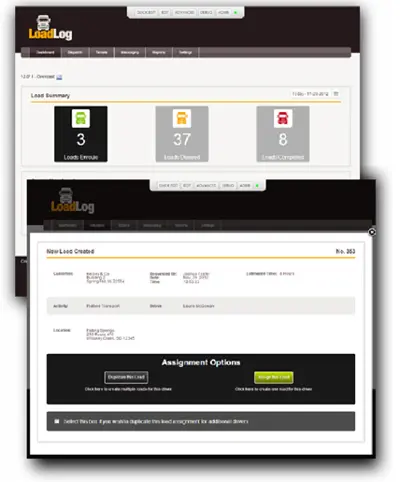
As a hard-working team of analysts, engineers, and designers, we were particularly proud of what we achieved with our LoadLog app that we built for a trucking company that ships supplies into the gas and oil fields of North Dakota.
Our app is a hybrid online application that uses an SMS communication channel. When you're dealing with midnight trucking runs through freezing winter conditions, you need something that gets information to the truckers reliably, and SMS is much more reliable in rural North Dakota than the usual web communication. The app automates the driver's load logistics and driver tickets, and this reduces the time-waste for the truckers who, before the app, were constantly filling out paper tickets.
And the app is a miracle for the dispatchers. They simply log into the application dashboard to see the location of every truck, and to also track the truck's progress in its workflow. They can also use the app to issue new tickets to those truckers in real-time and calculate average delivery times.
Frankly, it was a game-changer for the company, and it's a powerful enhancement for the trucking industry.
Let Us Help You Create Your Next Big Idea
If your business needs a mobile app to make as big a splash in your industry as these apps did in their industries, contact us to find out what amazing things we can build for you.
4 Innovative Apps for the Apple Watch
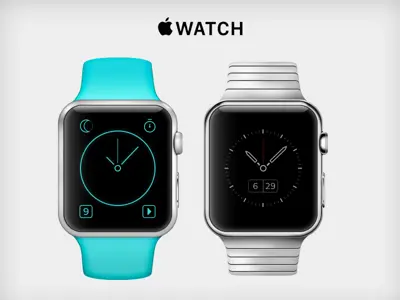
Now that Apple Watches have had a few months to saturate the market, not surprisingly, word is getting out about some especially cool apps for Apple's new wearable.
And in case you need a little inspiration for your own app creation brainstorming, here are a few of the most innovative Apple Watch apps on the market today.
1. Know When It's Going to Rain in Your Location (Down to the Exact Minute)
If you're the kind of person who loves taking quick walks outside during your work day but you live in a region whose weather is temperamental and hard to predict, the Dark Sky app for Apple Watch might become your best friend. With a simple tap of the wrist, Dark Sky will let you know if it's going to rain or snow in your location. It can predict the chance of rain for your location down to the exact minute.
2. Control Your Car
If you've ever seen the classic "Knight Rider," David Hasselhoff's character Michael Knight was famous for communicating with his car Kitt through his watch. Well -- as this Denver news story noted -- if you're an owner of a Hyundai, Volkswagon, Tesla, Mercedes-Benz, Porsche, and BMW, your Knight Rider dreams have come true. You will be able to use your Apple Watch to do things like start your car, adjust the temperature before you get in, check the status of systems or the status of the car's battery, and other fun features short of driving the car remotely.
3. Dictate Notes and Other Evernote Tasks
Evernote, on their website's announcement for its new Apple Watch app, makes an excellent point: Apple Watch apps are not meant to replace iPhone apps; they're meant to compliment them. And that's exactly how Apple intended it. The new Evernote Apple Watch app will have some cool quick and easy features that will delight fans of Evernote (and possibly lure others who haven't discovered Evernote yet). As theEvernote site explains:
The iPhone and Apple Watch versions of Evernote work together beautifully. Dictate notes, perform searches, and see recent content on your watch when you need it. Set reminders and check items off your list without ever taking out your phone. Start reading a note on Apple Watch, then continue reading it on your iPhone with a swipe of the lock screen. It’s one app that moves with you from wrist to hand and back again.
4. Something for the Star Gazers
As GeekWire noted in April 2015, the Sky Guide app for the Apple Watch will be a delight for budding astronomers.
This app also belongs firmly in the category of "built to complement the iPhone app, not replace it." The Apple Watch Sky Guide app doesn't duplicate the iPhone app's function of locating constellations by lifting your phone to the sky. No one will be lifting their watch above their head, in other words.
Instead the app focuses on other cool functions. For example, with a single swipe up, the app summarizes at a quick glance everything happening in the sky above your specific location. If you allow it, the app also sends automated alerts to your Apple Watch when, for example, the International Space Station is going to fly over you and be visible to your specific location. It can do the same for eclipses and meteor showers, and all of it is tailored specifically to your precise location.
We Can Help You Enter the Exciting New World of Wearable Apps
Contensive's talented, hard-working team of engineers, analysts, and designers wants to work with you to build something amazing. Contact us to learn more about our mobile app development services and discover what we can do together
5 Cutting Edge Mobile App Development Tools To Make Your Life Easier
Looking for a set of tools that smooth the long and treacherous journey of app development? Look no further.
Here is a collection of 5 cutting edge mobile app development tools with powerful and easy to use frameworks that eliminate the need to learn the complexities of Objective-C (iPhone) and Java (Android). To make your life even easier, many of these tools provide back end cloud services, which do away with the need to build your own database and maintain your app.
Spend less time on manually coding, building and maintaining infrastructures, and more time on creating an awesome app.
Sencha Architect
Sencha Architect helps developers accelerate the HTML5 app development process for both desktop and mobile applications. It comes with drag-and-drop features and a variety of editable and completely customizable app templates to help you get started. The automatic coding generation saves developers time on manually coding while optimizing it for high performance and eliminating human error.
The Visual Theme Builder provides several professional designed themes that you can customize to match your vision and/or the look and feel of your company. Developers can also add custom components to the already existing list of framework extensions Sencha provides, letting the framework handle the layout, widget management, and event juggling.
Corona SDK
Corona SDK is a cross-platform tool that works on all devices (from iOS to Kindle Fire) and is designed for super-fast game application development. It has all the usual features for creating an app, including an indispensable OpenGL engine specifically optimized for 2D graphics. It combines powerful tools like Photoshop and Illustrator and allows you to simulate your app in a real-time, physics engine.
The company provides a cloud service that lets you store all information from your game. You can also create leaderboards, track achievements, integrate social networking channels, and offer chat sessions using the Lua code, an easy to learn language.
Telerik
Telerik (once Icenium Mist) is a browser-based tool lets you build and test your app on all mobile platforms without the need to buy any additional hardware. It provides a single, reusable HTML5/JavaScript code base that includes built-in simulation, debugging and deployment tools. With Telerik LiveSync, you can instantly experience your code, while also skipping out on most of the manual process of building and deploying your app.
Telerik also provides plugin for Visual Studio, Sublime Text, and a Command Line Interface (CLI) that can enhance and work alongside your existing IDE. The Appbuilder can also integrate with Angular, jQuery mobile, Ionic and Kendo within a productive PhoneGap/Cordova development environment.
Parse
Most of tools mentioned here are concentrated on creating the front end, interactive side of app development. Parse, however, focuses on building the back end, offering a set of powerful APIs that can store, track and analyze data for your app. Parse also provides push notification services, a cloud database, and seamless interaction with the major social networks.
There are 13 native SDKs for mobile, desktop, and IoT devices that eliminate the need for complex infrastructure regarding your server-side interaction, allowing you to focus instead on building the front end of your app.
Appcelerator
Appcelerator provides both front end and back end services, which allow you to build, test, measure, connect and tune your app. It provides a single Javascript code base that contains a large collection of widgets that can be strung together to build native mobile apps for iOS, Android, Windows, BlackBerry, and HTML5. Appcelerator also offers real-time mobile analytics for every native app you build, regardless if built on their platform or directly with a native SDK.
Their set of cloud applications can do everything from storing information, monitoring data, and even sending emails. Specialized tables also help you better manage your social media accounts, featuring geographic information and photographs for each of your "friends".
Now that you have a list of tools to choose from, you just need to get the most out of your design. For assistance and support and just good advice, contact us to help you make a great mobile app.