

Tips to Provide the Best Website Experience, Page 14 of 25
Discover expert articles on website optimization, security, speed, and content management from Contensive. Learn strategies for building better web experiences.
What can a Mobile App do for Your Company?

The world of mobile applications has been continuously growing for years. Apps are on their way to becoming what software used to be. One of the biggest sectors of growth has been in branded apps. Companies create an app under their own name, and use it to help their customers and clients. The list of things that can be done with apps is endless, and so many companies have taken advantage of that. Is a branded app the right move for your company? Well, that's up to you, but here are a few of the benefits that come with offering your own app
Make sales
This is one of the most direct benefits of having an app. If you offer your products or services through your app, many customers will find that making purchases through the app is even easier than any other method. This can lead to more sales. Examples of this can be found especially in the travel industry, for example, airline apps selling flight tickets, and in the online superstore industry, such as Ebay and Amazon.
Stay in touch
Most apps include a way to contact the company who created them. How user-friendly you make this option is up to you, but any client or customer appreciates the ability to contact a company that they do business with. It can be even more helpful if the contact options can be accessed while offline.
Advertising and updates
Consider advertising through your app. Users are already interested in your service or product, and your app is a very efficient way of communicating other things you have available. You don't have to worry about annoying customers, because it only happens when the app is open, and best of all, it's free. Since it's your app, the only cost to advertise there is the cost of creating the content. The same concept is true when it comes to updates. If your company is selling something new, putting on an event, or looking for new staff, your current customers are the best market to share that information with first. If they have downloaded your app, you can share it with all of them, instantly, and of course, it's still free.
Keep your company in their mind
Every time someone opens your app, they think of you. Even when they're doing something else, they'll see your logo every time they use their phone. When customers think of you often, sales go up.
Offer additional services
Depending on what your company offers, your app may be able to offer additional services to your customers. For example, an airline might offer an app that lets their customers keep track of their own flights, and then send them real-time updates on delays or cancellations. People like when they can streamline everything through their phone. A grocery store might offer the users of its app the ability to create a shopping list, and then suggest coupons based on the products they need. Thinking outside of the box will lead to an app that does something for users that no other app can do. Imagine that app that everyone wants to use having your company's name and logo on it.
Keep tabs on your customers
Although it's important to be careful about which information you choose to store, there are some basic things that it might be helpful to learn about your customers, but that you just can't get effectively from website data. For example, an app, if coded properly, can track where the users are, giving you some clues as to where most of your market base is. It can also help you keep track of everything they've bought, and maybe even tie that to a phone number. If you're careful about how you treat your users and their privacy, you can learn a great deal of useful information about them.
Think a mobile app might be able to help your company? Contact us. We can answer all of your questions, help you decide, and even help you get started, if you'd like.
6 Keys to Success With a Custom Web App
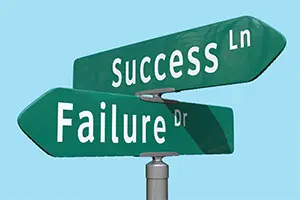
Lately, it seems like a custom web app is absolutely necessary to do business online, and even companies that have excellent responsive websites have companion apps. Despite this, very few of these apps live up to their promise. What can you do to ensure that your app will keep people's interest? Here are a few things that will help ensure that your offering won't end up being uninstalled:
1. Keep it relevant. Most companies have caught on to this, but there are still a few that make the mistake of releasing an app that has nothing to do with their main service. An example of this would be a food company that puts out a video game. That may work if children are the target market, but if you cater to adults, you need to keep a tighter focus. The food company in the example would be better off with a cooking app or one that promotes eating the types of food that company sells.
2. Don't just duplicate your site. This is especially true if you have a great adaptive site that offers just as much functionality on the small screen as the app would. This offers no value and will soon find its way to the uninstall list. It's a good idea to offer shopping capabilities if your business involves online buying, but remember that your mobile site is already there to take orders. Your app's main function should be to augment it rather than duplicate it.
3. Come up with something unique. Don't worry if you draw a blank on this one. If you talk to a full-service development company, they should be able to brainstorm with you to devise a new angle. Developers get orders all the time, so they can tell you if an idea is something different or a "yet another X" concept. Developers are also good sources of ideas for methods of presentation and other areas that can be made unique even if the main concept has been done.
4. Don't charge unless you're in the app business. People will pay for apps if they're being sold by app companies, but it's a much different story if your business is something like selling cars. In the latter case, people expect your app to be free and will generally refuse to "pay for your ads."
5. If you are in the app business, avoid saturated concepts. This is basically a matter of supply and demand, but it also ties in with the fact that it's much harder to excel when a market is already full of top-notch competition. Avoid saturated categories unless you have a truly unique concept. Go ahead and commission a custom app that you think could be the next Angry Birds - but avoid copying the one that already exists.
6. Hire an experienced and adaptable developer. This is an essential requirement no matter what you intend your app to do or why you want one. Modern developers can keep up with changing project requirements and use processes that assume that changes will be needed. This is much different from ones who use old-fashioned methods that demanded exact specifications from the start and couldn't accommodate changes midstream. Of course, the value of experience barely needs to be explained. Developers who have plenty of it are the ones who are most likely to deliver a glitch-free product and do so within the estimated time frame.
By keeping these six key factors in mind, you'll increase your chance of being successful with your app. To learn more or discuss having a custom app produced, just contact us. We'll be glad to work with you.
10 Things that Everyone Hates about Waterfall Development

Waterfall development is a software development model. With this model, there is a designated progression of actions that are taken throughout the time that the software is being developed up until the time that the software is released.
This system is one that has been in existence for several years. For the most part, it is made up of six distinct phases:
- Requirements analysis
- Design
- Implementation
- Testing
- Installation
- Maintenance
One thing about waterfall development is that it is a fairly controversial process. Many developers will agree that there are aspects of this system that simply do not work well. In fact, below you will find 10 things everyone hates about waterfall development.
1. Limited Flexibility
Arguably one of the biggest drawbacks of this system is the fact that it has not been designed to offer flexibility. When software is being created, there are times when the customer isn't completely sure of what they truly need. Unfortunately, knowing what is needed up front is the basis behind the first phase of this system.
2. Inaccurate Financial Planning
Another issue that is huge for developers who choose the waterfall model is that it is extremely difficult to determine how much time and cost will be needed to implement the software. Since the requirements are to be laid out beforehand, this can be an incredibly inaccurate process.
3. Projects become Difficult
After the design phase, many enter into the project only to find that implementing it is nearly impossible. While the designs may look feasible on paper, they turn out to be extremely expensive. This could cause a re-design to be necessary.
4. Division of Work
The waterfall development process also designates certain work to be completed by certain types of workers. For example, there is a clear distinction between designers, programmers and testers. However, dividing this type of work in the real world is not realistic.
5. It Wastes Time and Resources
Throughout each phase of the waterfall process, only a select number of team members are qualified to complete work. This means that others will simply be sitting idle while waiting for their phase to begin. Naturally, this is a great waste of resources and can actually make the project take longer.
6. It's Risky
Using the waterfall method can also be very risky for software development companies. Each phase takes quite a bit of time to complete. Also, changes to the requirements can mean that the entire model will need to be started again. This can be devastatingly expensive, especially if the client decides to cancel the project after going through several phases.
7. It's not Mobile Friendly
In today's world, developing a complete set of requirements up front is not feasible. This is not something that will be possible when building a mobile app or a website. Since this is one of the main items that is completed by businesses of today, a different process will be needed for these types of tasks.
8. Updates are Difficult
After the software has been completely designed using the waterfall process, many developers find that it is more difficult to update in the future. While updates are possible, they are difficult when this method has been chosen.
9. Doesn't work for Difficult Projects
The idea behind the waterfall development system is that it is intended for a simple project. Unfortunately, there are very few projects these days that are simple. Instead, most require a great deal of attention and focus in order to complete. Using the waterfall method for these types of projects can cause them to be more expensive and take more time.
10. Can't look back
Finally, once a phase is completed, it is closed. This means that it will be nearly impossible to make changes to a completed phase. This is why gathering requirements upfront is so important. Making changes to a closed and locked phase is a nightmare.
Choosing the right software development strategy is important for any business. For this reason, it is crucial to learn more about the pros and cons of the development options that are available. Contact us today to learn more about the options that are available for your project.
A Beginners Guide to Mobile app development
Since they were first created, the sales of smartphones and tablets have continued to climb. What does this mean for the business world? It means that mobile computing is here to stay and definitely a major part of the future.
Keeping up with technology has long been something that businesses attempt to do. To do this in today's world, this means that more emphasis is on mobile services that will reach the majority of a company's customers. Developing mobile apps is something that many businesses and individuals are now focusing on for this reason. However, this is a difficult task to tackle for beginners. To get started the right way, be sure to rely on this beginner's guide to mobile app development.
Options
The first thing to note, is the different types of options that are available for mobile apps. The first is called native applications. This is a piece of software, which developers design for tablets and smartphones. Users of these apps will download the software directly onto their device. Businesses will need to build a different version for each platform where the app is available.
Here are the platforms to focus on:
- iOS – smartphone and tablet
- Android – smartphone and tablet
- Windows Phone 7 – smartphone
- Windows 8 – tablet
A web application is something that has also been designed to work on a smartphone or tablet. With a web application the user will visit a website through their web browser in order to use the application. This doesn't require installation of software on the device.
Which one is Best?
When developing an app, it is important to keep in mind that the app will work alongside other portions of the smartphone or tablet. For example, native apps may need access to hardware sensors, like the camera or microphone.
Web apps, on the other hand, may need access to other items like the GPS and are not allowed to access the camera or microphone. Determining which type of app to develop can depend on what the app will need to function properly.
Security
The biggest advantage of mobile computing is that it is taken everywhere. Unfortunately, this means that the device can easily be lost or stolen as well. One of the downsides of using a native app is that information is stored on the device itself. This can pose a security risk if the user ever loses their device. However, when choosing a web app, users will benefit from additional security because of the location of the stored data since it is not stored on the device.
Requirements
After choosing the best type of mobile app to develop, it is then important to determine what is needed to actually develop the app. Along with this, there are certain steps that businesses need to consider as well.
The first thing that businesses will need is a developer. This developer will need to understand the mobile platform programming language. This language what developers use to create the app. Java, Objective-C and C# are the three most commonly used languages for native apps. While a web developer can writ a web app in any language, the web developer will need to understand HTML, CSS and Javascript.
When developing a native app, the developer will then need to join the developer program for platforms that will help to develop the app. This is not necessary for a web application. At this point, the web developer will can build the app that a business needs. However, keep in mind that the process doesn't end with the building of the app. Instead, a team will need to maintain and updating the app regularly.
Businesses around the world are quickly turning to mobile computing. However, choosing the right path to take is a challenge. The best thing that any business can do is to learn more about mobile app development and the ways that it can benefit their company. To learn more about this process, be sure to contact us today.
Why You are Failing at Responsive Web Design
Why you are failing at responsive web design
Technology is moving at the speed of light and demanding us to attempt to keep up with it. There's more than meets the eye when attempting to keep up with client demand than just making a client’s site mobile friendly. Yes, what you know is important but what you don’t know or adequately applying what you know is what will keep you from reaching your desired outcome. As a developer if your work is not producing the results you want here are few reasons why you are failing at responsive web design.
Elements of Responsive web design
Regarding responsive web design it's all about problem solving. We see a problem, analyze it, break it down then create a solution that makes life easier. While this is a sometimes grueling task it's worth all the hard work in the end. A basic rule to keep in mind is that when users visit a site all the pieces of the web puzzle and technological aspects need to flawlessly fit in order for user interaction to occur.
Screen size, platform and orientation are pieces of the puzzle that make up qualitative design and development. Other aspects include flexible grids, images and knowledgeable use of CSS queries. Whether the user switches from a desktop, laptop or iPad, proper response development allows the website to automatically switch to accommodate for resolution, image size and scripting abilities.
In order to keep up with the exponential speed of technology you must address consumer convenience and demand. Consider these statistics:
Maximizing the browser experience
If your users have a memorable experience when they visit the website, they'll come back. The site’s appearance and visual structure should change without content or function loss for the users of any specific device or screen size. Being aware of the most popular screen sizes and resolutions when designing a site will optimize user interaction.
Think Responsive
There are hundreds of layouts you could use to make the website look good. However, some layouts are more developmentally ideal for responsive design than others. Consider using designs that convert better to assorted new sizes.
Site element compression
Compression of page resources allow for easier transmission across networks. Reducing the number of bytes sent per page or element, creates easier content browsing formation. This also allows greater accessibility for devices with varying or low-bandwidth.
Flexibility
Structural elements and texts in the layout column were once the only flexible option available in early web development. Sometimes simplicity works best. Application of adaptive sizing and width resizing provides a flexible option for images. Flexible layouts allow images for automatic adjustment without breaking up the layout pattern. This is a perfect solution for devices that switch from portrait orientation to landscape instantaneously or when the user switches from a large computer screen to an iPad.
Another option although not as simple as the previous choice, is to use variable break points. However, when storing multiple image sizes in your data to accommodate for screen resolution you may encounter challenges regarding bandwidth usage.
There are many aspects to the web design puzzle and as a developer failing is not a viable option. Knowledgeable application creates solutions and optimizes responsive web design.
Contact us today to find out more information about our products and services.
4 Dirty Little Secrets About Mobile Apps: What the Other Guys Don't Want you to Know

It is shocking to think that 10 years ago people didn't even know what a mobile app was. Now apps are beginning to replace the internet and your business isn't a business unless it has a companion app. When it comes to mobile technology we have come a long way in a relatively short amount of time which has led to some major benefits, but maybe also made us oblivious to a few of the draw backs.
With mobile apps - especially business apps - in high demand mobile app development is a quickly growing field and, unfortunately, its fast growth is creating more than a few snake oil salesmen. When looking for the best and most reliable applications for your business you want to know that you can rely on the app itself and the company that is developing it. Here are 4 dirty little secrets about mobile apps that the other guys don't want you to know.
It Doesn't Mean Immediate Visibility
Some companies believe that they will get a million downloads and catapult into super stardom within hours of their app hitting the market, but that is simply not the case. There are hundreds of thousands of apps on each app store now so it is surprisingly easy for your app to get lost in the mix. Even when it does land in front of people they need to have a reason to download your app whether it is a new idea all together or a better version of something else that is out there. Unless you are extremely lucky every app launch comes with a certain amount of mandatory marketing.
An App Needs Lifetime Support
A lot of app developers are comfortable creating a basic app for you then kicking you out the door with no back-end support. Just like any other software, apps need to be maintained and updated as technology and information continue to evolve. If you are not getting lifetime support for your app you may find yourself having to pay someone to create a whole new app for you every year which is not cost-effective and may confuse users.
There is no Proven Method...Yet
Developers go back and forth more than a ping-pong game in congress when it comes to development best practices. Some developers swear by the software developer's kit or SDK of their respective platform because of its stability while others believe that HTML5 is the best way to go because of the versatility and options it allows. The fact of the matter is that it really all depends on what your developer thinks is the best way to go about your project specifically and it will most likely always be that way unless a singular SDK emerges that puts traditional and HTML5 development to shame.
It's All About the User Interface
You could have the most incredible, technical, best-at-its-job app there is on the market, but if it isn't pretty it won't sell. People have come to expect their apps to be visually appealing and easy to navigate whether it is a game or a mobile business application and if your app doesn't meet their criteria it is going to be deleted as fast as it is downloaded. Make sure that your developer spends a little extra time on the user interface, you and your end users will appreciate it.
There are many things that inexperienced app developers don't want you to know. They bank on the fact that you don't know much about the development process and the sneaky tricks that some of them use to get your business. If you are looking for a development team who won't trick you, knows about what makes an app good-looking and marketable, and most importantly offers lifetime support for their services contact us today.
Read These Five Killer Quora Answers on Agile Programming

Quora.com is a venue where people can submit questions on topics, and then experts on those topics, often people working in that industry, can submit answers. What makes Quora so brilliant is that you'll often find answers from some of the top names in an industry. It's a treasure trove of accurate information directly from the source.
For this article, we found five Killer quora answers on agile programming that users had submitted to Quora:
1. What are the differences between SCRUM, XP and Agile in general?
Jeff Sutherland, inventor and co-creator of scrum, explained that "the best Scrum teams implement XP engineering practices inside the Scrum. The best XP teams wrap Scrum around XP as it allows them to scale and take advantage of the high performance gains possible with Scrum."
In addition to this insight, Sutherland provides a detailed history on the development of agile programming and how scrum and XP fell into place in the context of that history. He notes that he started his first Scrum project in 1993 at Easel corporation, and he based their work on a book by Takeuchi and Nonaka called "The New New Product Development Game," published in 1986 by the Harvard Business Review. You can see his full answer, with all the fascinating historical details, here.
2. How many user stories are optimal for an Agile software project?
Cliff Gilley, an Agile practitioner for 15 years, explained that there is no magic number. User stories should reflect user goals, features, and functionality. He makes an important point: "however many of those [features, functionality, user goals] you need to document and execute is the number of stories that you're going to need." His personal preference, however, is no less than two: the story the team is currently working on and the next story that is in need of work, "ready to go as soon as the team finishes the current story," as he explains in his answer, which you can read in full here.
3. Can you recommend books which walk through a programming problem in an agile context?
Warren Wise gave the following insightful answer:
Agile Software Development, Principles, Patterns, and Practices by Robert C. Martin? It's an old book (2002), but it explains agile principles very well and provides a good working example of agile development practices (e.g., test driven development, refactoring). It also illuminates the SOLID principles of object-oriented development. Code examples are in Java (mind you, it's the version that was in use at the time).
As old as this book is, I recommend it because the author's fundamental understanding of agility is phenomenal. Also, when it comes to object orientation, I've found that may of the earlier books are actually the most enlightening.
4. Why do people choose Scrum over extreme programming when both are frameworks of Agile?
Gerry Claps, VP at Blossom.io, a Scrum master and product owner, wrote this in reply:
Comfort. Why? Scrum offers more 'standard' management artifacts and practices. For example:
- Meetings --> Daily standup, Sprint Review, Retrospective
- Documentation --> Product Backlog, Sprint Backlog
- Metrics --> Velocity, Burndown chart
Extreme Programming (XP) is focused around engineering practices, which work great in almost any software development context, but are less useful in managing the work itself.
5. How shall I adapt Scrum to be used in a multiple project/program environment?
Murray Robinson, Agile practitioner and evangelist, wrote the following answer:
The scrum view is that you work with your senior product owners and scrum masters to break your program of work up into independent chunks of functionality that deliver customer value and that can be progressively delivered by a cross functional scrum team of 4 to 8 people within 2 to 4 months (about $200k of work on average). You put these epics in a program back log, estimate them at a high level and assign them to scrum teams in order of priority. As the teams work through the back log you calculate program velocity and run a program burn up or burn down chart.
If you have a lot of work you have many scrum teams operating independently and delivering frequently so you get almost continuous delivery of functionality and business value into production. If the teams need to coordinate their work they do so through a daily scrum of scrums. In this approach the project manager steps up to the program manager role and has multiple scrum masters reporting to them. The big assumption underlying this model is that you can break the work up into many small independent chunks that can be delivered in a few months. This can be difficult to do in practice. The business may not be able to elaborate or prioritize epics or get funding until they can have completed an overall product, process and UI design; and the technical teams may not be able to estimate, prioritize or elaborate the epics until they have designed the system architecture they have in common.
What is Scrum and Why You Should Use it for Your Agile Development
If you have been struggling to get your projects completed on time, efficiently and with fewer headaches, you will want to look seriously at the Scrum Agile development process.
SearchSoftwareQuality, an online tech publication, describes scrum as a project management concept for software development. The concept of scrum is that it is designed for use with multiple small teams working tightly together in almost a rigid format but all moving in same direction.
For software application development, Agile software development (ASD) is a technique on the creative side of the process that can foresee the need for flexibility allowing the finished product to be accomplished more quickly.
Put them together and you have the best of both applications to get a project off the ground quickly and efficiently: Scrum in Agile Development.
Break it Down
Scrum involves not just the adoption of a new business process or a framework for managing software development. It is a new way of transforming the way work has traditionally been managed before.
Steve Denning writes in Forbes that "Scrum is a solution to the problem of combining disciplined execution of high-level intellectual work with continuous innovation."
The practices of Scrum for software developers using terms such as “sprints”, “burn down charts”, “product owner”, “scrum-masters” basically comprise specific core practices that organize a team to breakdown exactly how a project will lay out and get completed in a much shorter and more organized amount of time. The teams allow a project to proceed in what are called "short cycles:"
- The management doesn’t interrupt the team.
- Define work goals through customer stories:
- The team calculates how much time work will take:
- The team decides how much work it can do in an iteration:
- The team reports to the client.
- The team measures its own performance:
- Define work goals before each cycle starts:
- Systematically remove impediments:
- The team decides how to do the work in the iteration:
In an article written by Michael James about Scrum, James says that when the practices are organized in this way, beyond the realm of software development, they can be dynamic and link break from the traditional practices of ranked bureaucracy, where individuals reports to bosses to produce outputs.
Teams using the practices have been enormously productive. These were not just improvements that just slightly better than the norm. The most product teams usually obtain productivity gains of up to 400 percent, changes that are industry-changing improvements.
Some mixed implementation results of Scrum
Sometimes the results are mixed. The term assigned to this is “Scrum-butt.” These are examples of a failure to implement the full practices of Scrum. It's important to be sure to implement all the practices for it to work. Doing the work in short cycles but interrupting the team during the cycle, the potential gains in productivity don’t occur.
In part these problems of implementation have flowed from the way Scrum is sometimes viewed and introduced.
When you try to insert Scrum as a project management structure in a setting of a conventional management of ranked bureaucracy, there are unavoidable conflicts. Usually the existing culture will be triumphant.
This experience sometimes leads people to believe that Scrum is just another management fad that didn’t work.
What the experience really shows is the opposite: that ranked bureaucracy is a work culture that no longer fits the marketplace of today. Scrum works. It’s the conventional management culture that doesn’t work.
As a result, Scrum projects achieve higher customer satisfaction rates.
If you are ready to put Scrum and Agile technology and methods together, be sure to contact us and we can get you to a more efficient level of project management.